XRP ETFs Explained: How XRP Exchange-Traded Funds Work
- 4 Jul 2026

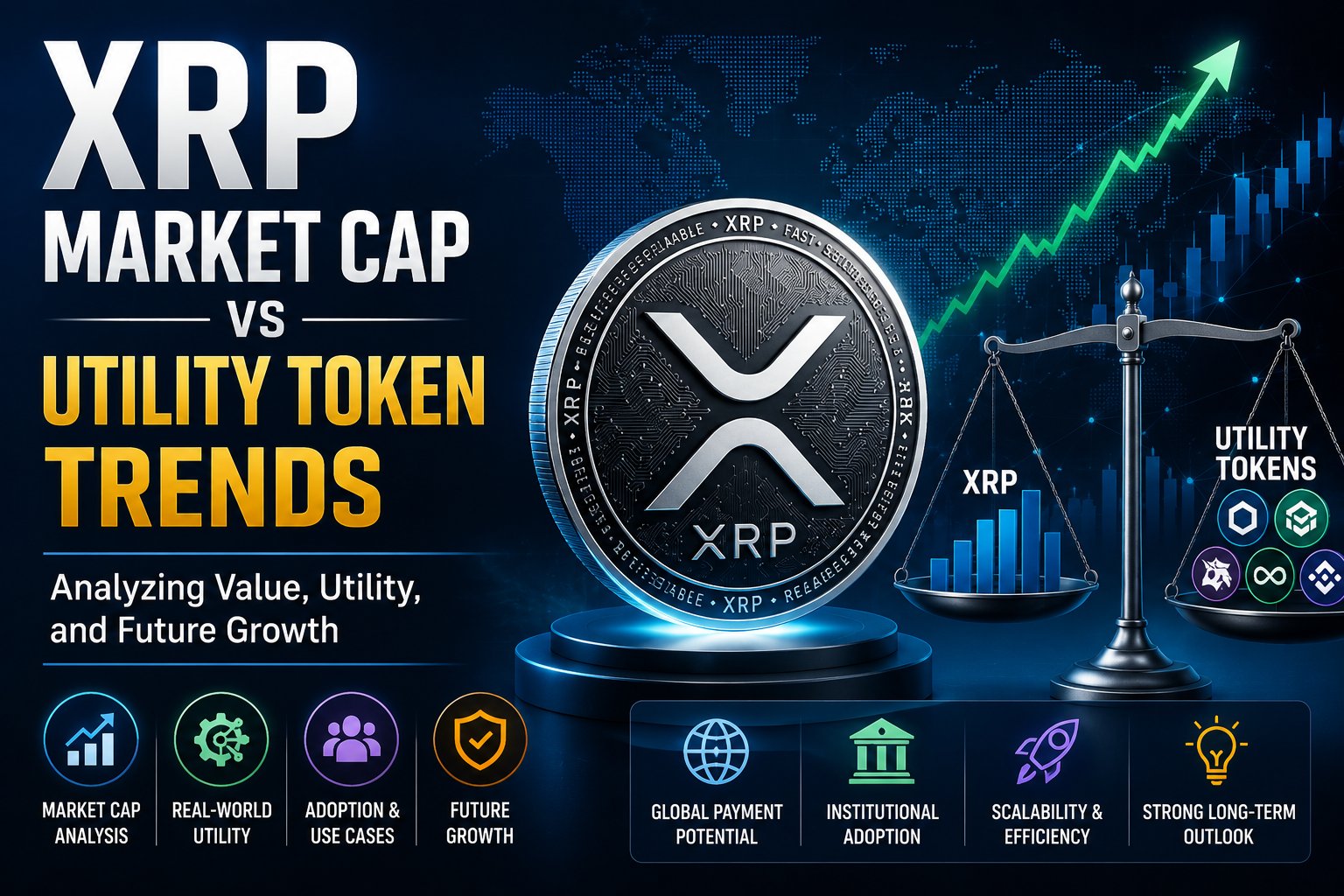
The cryptocurrency market has evolved significantly since Bitcoin’s inception, introducing thousands of digital assets with different use cases and value propositions. Among these assets, XRP has consistently remained one of the largest cryptocurrencies by market capitalization. However, investors increasingly compare XRP’s valuation against broader utility token trends to determine whether its market cap accurately reflects its real-world adoption and long-term potential.
Understanding the relationship between XRP market cap vs utility token trends is essential for investors seeking insights into how crypto assets derive value, attract institutional interest, and compete in an increasingly utility-driven blockchain ecosystem.
XRP is the native digital asset of the XRP Ledger (XRPL), a decentralized blockchain designed to facilitate fast and low-cost cross-border payments. Created to improve global financial transactions, XRP aims to bridge liquidity gaps between different currencies and payment networks.
Key features of XRP include:
Unlike many cryptocurrencies that focus primarily on decentralized finance (DeFi), XRP’s primary value proposition centers on payment infrastructure and financial institution adoption.
Market capitalization, or market cap, is calculated by multiplying a cryptocurrency’s current price by its circulating supply.
Formula:
Market Cap = Current Price × Circulating Supply
Market capitalization helps investors evaluate:
However, market cap does not always reflect actual utility, network activity, or long-term adoption potential.
Utility tokens are cryptocurrencies designed to provide access to products, services, or functionalities within a blockchain ecosystem.
Examples of utility token use cases include:
Unlike purely speculative assets, utility tokens derive value from network demand and ecosystem growth.
One of the most debated topics in cryptocurrency investing is whether XRP’s market capitalization aligns with broader utility token adoption trends.
XRP has historically maintained a top-ranking position among cryptocurrencies by market cap due to:
This market position often places XRP ahead of many utility tokens that may have smaller valuations despite active ecosystems.
Recent utility token trends indicate that investors increasingly prioritize:
Projects that demonstrate measurable utility often attract greater long-term investor confidence.
As blockchain adoption expands, utility-based valuation metrics are becoming more influential than simple market speculation.
Investors are increasingly favoring projects with practical applications rather than purely speculative narratives.
Examples include:
XRP benefits from this trend because its primary focus remains solving payment inefficiencies.
Institutional investors are paying closer attention to blockchain networks that provide measurable business value.
Factors influencing institutional interest include:
XRP’s payment-focused infrastructure positions it within this growing institutional adoption trend.
Utility token valuations often correlate with actual network usage.
Metrics commonly analyzed include:
Projects demonstrating consistent user engagement generally receive stronger market support over time.
Regulation continues to play a significant role in cryptocurrency valuations.
Positive regulatory developments can:
For XRP, regulatory clarity remains one of the most closely watched factors affecting both market cap and adoption potential.
Opinions differ among analysts regarding XRP’s valuation.
Supporters argue that XRP’s market cap reflects:
Critics suggest that market cap alone may not fully represent:
As a result, investors increasingly combine market cap analysis with utility metrics when evaluating XRP’s long-term prospects.
Many newer blockchain projects focus on areas such as:
These projects often experience rapid growth in user activity and developer engagement.
However, XRP’s advantage lies in its:
The competition between established assets like XRP and emerging utility-focused tokens highlights the evolving nature of crypto valuations.
When comparing XRP market cap vs utility token trends, investors should consider:
A larger market cap often indicates stability but may also limit explosive growth potential compared to smaller projects.
Monitor:
Changes in regulatory frameworks can significantly impact XRP and utility token valuations.
Projects with sustainable utility often have stronger foundations for long-term value creation than those driven solely by speculation.
The discussion around XRP market cap vs utility token trends reflects a broader shift in cryptocurrency investing. While XRP remains one of the most recognized digital assets in the market, investors increasingly evaluate cryptocurrencies based on utility, adoption, and measurable ecosystem growth.
As blockchain technology continues to mature, utility-driven metrics may play a larger role in determining long-term valuations. For XRP, future growth will likely depend on its ability to expand real-world adoption, strengthen institutional partnerships, and demonstrate continued utility within the global payments landscape.
Investors who combine market cap analysis with utility-focused metrics can gain a more comprehensive understanding of XRP’s position within the evolving cryptocurrency ecosystem.
XRP’s market cap is calculated by multiplying its current market price by the circulating supply of XRP tokens.
XRP is often compared to utility tokens because its value proposition is based on facilitating real-world payment solutions rather than functioning solely as a speculative asset.
Not necessarily. Smaller utility tokens may have higher growth potential but often carry greater risk. XRP benefits from established market presence and liquidity.
Utility can drive demand, adoption, and network activity, which may contribute to long-term value appreciation.
Market cap is important but should be combined with adoption metrics, transaction volume, network activity, and ecosystem growth for a more complete assessment.
Key trends include institutional adoption, decentralized finance expansion, Web3 development, blockchain gaming, and increased real-world use cases.
Yes. As investors increasingly prioritize utility and adoption, XRP may benefit if it continues expanding its role in global payments and financial infrastructure.