
How to Recover Lost Crypto Sent to Wrong Address on Binance
- 18 Feb 2026

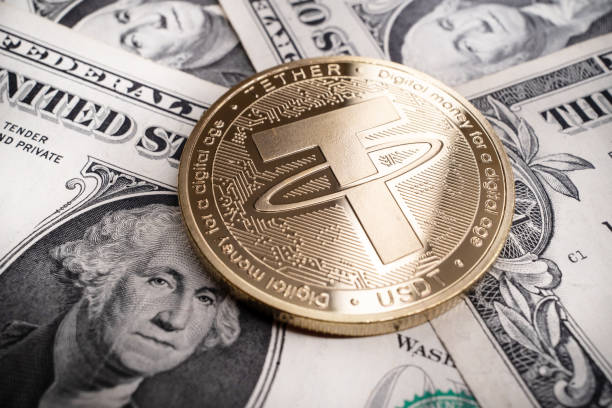
If you’ve ever searched “Is Tether backed by real USD reserves,” you’re not alone.
USDT is the most widely used stablecoin in crypto trading, cross-border transfers, and DeFi.
But the big question remains: what exactly backs USDT, and does that backing equal “real dollars” sitting in a bank?
In this guide, you’ll learn what “backed” means for Tether, how Tether’s reserves are typically structured, what attestations do (and don’t) prove, and how to evaluate risk if you hold or use USDT.
USDT is not necessarily backed 1:1 by physical cash dollars in a bank account.
Instead, Tether says USDT is backed by reserves that may include cash, cash equivalents,
and other liquid assets. So, when people ask, “Is Tether backed by real USD reserves?” the accurate framing is:
USDT is designed to be backed by a portfolio of reserve assets intended to match or exceed the value of USDT in circulation.
That’s different from saying every USDT is backed by one actual U.S. dollar bill or a cash deposit at a bank.
The quality of the backing depends on what the reserves are made of and how quickly they can be converted into cash during stress.
In stablecoin terms, “backed” typically means the issuer holds assets whose total value is intended to cover the tokens issued.
For USDT, the claim is: Tether issues USDT and holds reserves to support redemptions.
Here’s the practical meaning:
The most important takeaway is that “backing” is about reserve sufficiency and liquidity, not just the label “USD.”
Reserve disclosures for stablecoins often include categories such as:
From an investor or user perspective, the key is liquidity: how quickly the reserve portfolio can be turned into dollars to meet redemptions.
Cash and short-term Treasuries are generally viewed as more liquid than longer-duration or riskier assets.
If you’re evaluating the safety of USDT backing, look for disclosures that emphasize high-quality, short-duration assets
and minimal exposure to opaque or illiquid holdings.
When researching “Is Tether backed by real USD reserves,” you’ll often see the word attestation.
An attestation typically means an independent accounting firm reports what the reserves appeared to be at a specific point in time, based on provided information and agreed procedures.
An audit, by contrast, is usually broader, deeper, and designed to provide stronger assurance about financial statements, internal controls, and ongoing accuracy over a period—not just a snapshot date.
In plain English:
This is not to say attestations are useless—many market participants rely on them—but it’s important to understand their scope and limits.
A stablecoin’s peg is supported by the ability to redeem tokens for underlying value—directly or indirectly.
For large institutions and certain customers, redemption may happen with the issuer or through authorized channels.
For everyday users, “redemption” often occurs via exchanges: you sell USDT for USD (or another asset) at the market price.
When markets are calm, arbitrage can keep USDT close to $1:
Under stress, the system depends on whether reserve assets are liquid enough and whether redemption channels remain functional.
Even if you believe Tether has substantial reserves, USDT still carries risks. Here are the main ones to know:
If a meaningful portion of reserves is in assets that are illiquid, volatile, or hard to verify, converting them to cash during a rush of redemptions can become challenging.
Stablecoin reserves may be held across financial institutions and instruments. Failures, freezes, or access issues at custodians
can impact how quickly funds are available.
Stablecoins face evolving regulations. Legal actions, compliance requirements, or changes in banking access could affect operations, redemptions, and market confidence.
Even if reserves are sufficient, liquidity on exchanges can thin out during extreme volatility.
That can cause temporary deviations from $1, especially if users rush for exits.
If you want to verify claims about Tether USD reserves, here’s a practical checklist:
The goal isn’t to “prove perfection,” but to understand whether reserves appear liquid and sufficient relative to the supply of USDT.
“Safe” depends on how you use USDT:
A common risk-managed approach is to treat stablecoins like transactional tools rather than long-term savings accounts, unless you’ve done deep due diligence and accept the tradeoffs.
Not necessarily as cash. Tether’s backing is generally described as a mix of cash, cash equivalents, and other reserve assets intended to support USDT’s value.
Cash-backed suggests mostly cash deposits. Reserve-backed can include Treasuries and other instruments. Both can work, but reserve-backed quality depends on liquidity and transparency.
Supply/demand imbalances, exchange liquidity, fees, and market stress can cause small deviations. Larger deviations can occur during major market events.
Typically on Tether’s official transparency/reserves page, where they publish reserve information and periodic reports.
So, is Tether backed by real USD reserves? The most accurate answer is:
USDT is intended to be backed by reserves whose value is designed to cover the USDT in circulation—but those reserves are not always “all cash USD.”
If you use USDT, focus on reserve transparency, asset quality, liquidity, and redemption reliability.
For many people, USDT is useful as a fast settlement asset—but it’s still worth understanding what backs it and what risks come with that backing.