XRP ETFs Explained: How XRP Exchange-Traded Funds Work
- 4 Jul 2026

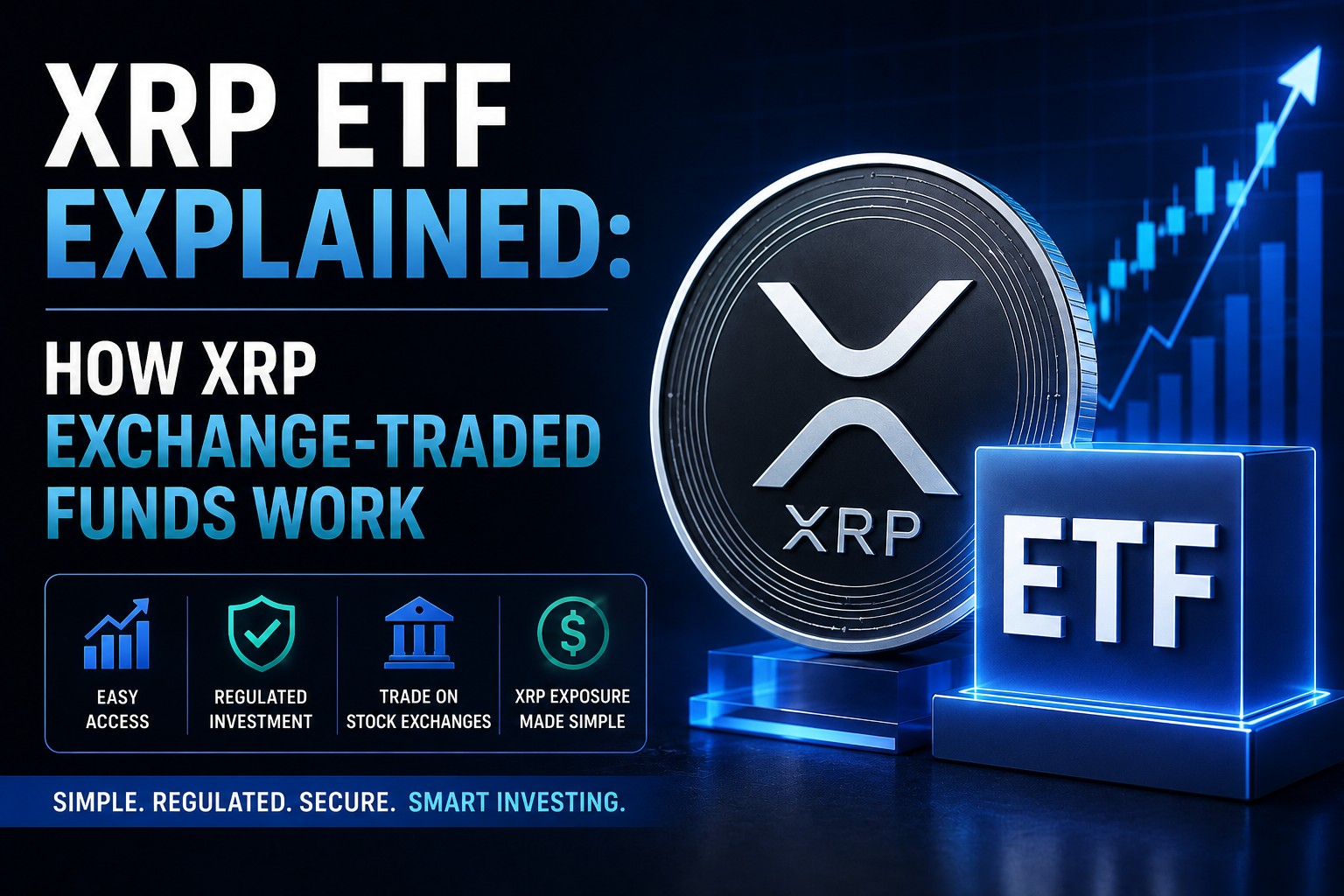
As cryptocurrency investment products continue to gain mainstream attention, XRP Exchange-Traded Funds (ETFs) have become one of the most talked-about topics among investors. An XRP ETF could provide exposure to the price of XRP without requiring investors to directly purchase, store, or manage the cryptocurrency themselves.
Whether you’re new to crypto investing or an experienced trader, understanding how XRP ETFs work can help you make informed investment decisions. This guide explains what an XRP ETF is, how it functions, its potential benefits and risks, and how it compares to buying XRP directly.
An XRP ETF (Exchange-Traded Fund) is an investment fund designed to track the price of XRP. Instead of purchasing XRP through a cryptocurrency exchange, investors buy shares of the ETF on a traditional stock exchange through a brokerage account.
The ETF provider manages the underlying assets or financial instruments, allowing investors to gain exposure to XRP’s price movements without dealing with crypto wallets or private keys.
Investors purchase XRP ETF shares through stock exchanges just like they would buy shares of Apple, Microsoft, or an S&P 500 ETF.
The ETF aims to closely follow the market price of XRP. Depending on the product, it may hold actual XRP (spot ETF) or use futures contracts and other financial instruments.
The ETF issuer is responsible for managing custody, security, compliance, and regulatory reporting.
ETF shares can typically be bought and sold during normal market hours through brokerage platforms.
A spot XRP ETF holds actual XRP as its underlying asset. The value of the ETF closely reflects the market price of XRP.
A futures ETF does not own XRP directly. Instead, it invests in XRP futures contracts, which may perform differently from the spot market over time.
Investors can gain exposure to XRP without creating cryptocurrency exchange accounts or managing digital wallets.
ETF providers handle custody and security, reducing the risk of losing private keys or falling victim to wallet hacks.
ETFs operate under financial regulations, which may provide additional transparency and investor protections.
Investors can include XRP exposure alongside stocks, bonds, and other ETFs within a traditional investment account.
The regulatory environment for XRP continues to evolve, and changes could affect ETF availability or performance.
Most ETFs charge annual expense ratios that can reduce long-term returns.
ETF performance may differ slightly from XRP’s market price due to management costs and operational factors.
Like XRP itself, XRP ETFs may experience significant price fluctuations.
Pros
Cons
Pros
Cons
An XRP ETF may be suitable for:
Those who actively use cryptocurrency for payments or decentralized finance may prefer purchasing XRP directly.
Several developments could increase interest in XRP ETFs:
Improved regulations may encourage financial institutions to launch additional XRP investment products.
Growing participation from banks, hedge funds, and asset managers could increase demand for XRP ETFs.
As digital assets become more widely accepted, ETF products may attract new investors looking for simplified crypto exposure.
Increasing adoption of blockchain technology and tokenized assets may support long-term interest in XRP-based investment products.
An XRP ETF offers investors a convenient and regulated way to gain exposure to XRP without managing cryptocurrency directly. While ETFs simplify investing and enhance accessibility, they also come with management fees and do not provide direct ownership of XRP.
Before investing, compare ETF costs, understand the associated risks, and consider whether a traditional investment product or direct cryptocurrency ownership better aligns with your financial goals. As the digital asset industry continues to evolve, XRP ETFs could play an increasingly important role in bridging traditional finance and cryptocurrency markets.
An XRP ETF is an exchange-traded fund designed to track the price of XRP, allowing investors to gain exposure through traditional stock markets.
Some ETFs may hold actual XRP (spot ETFs), while others use futures contracts or similar financial instruments.
An XRP ETF removes the need to manage wallets and private keys, but investors are still exposed to market risks.
If an XRP ETF is available in your jurisdiction, you can generally purchase shares through a standard brokerage account.
An XRP ETF provides price exposure without direct ownership, while buying XRP directly allows you to hold, transfer, and use the cryptocurrency.